
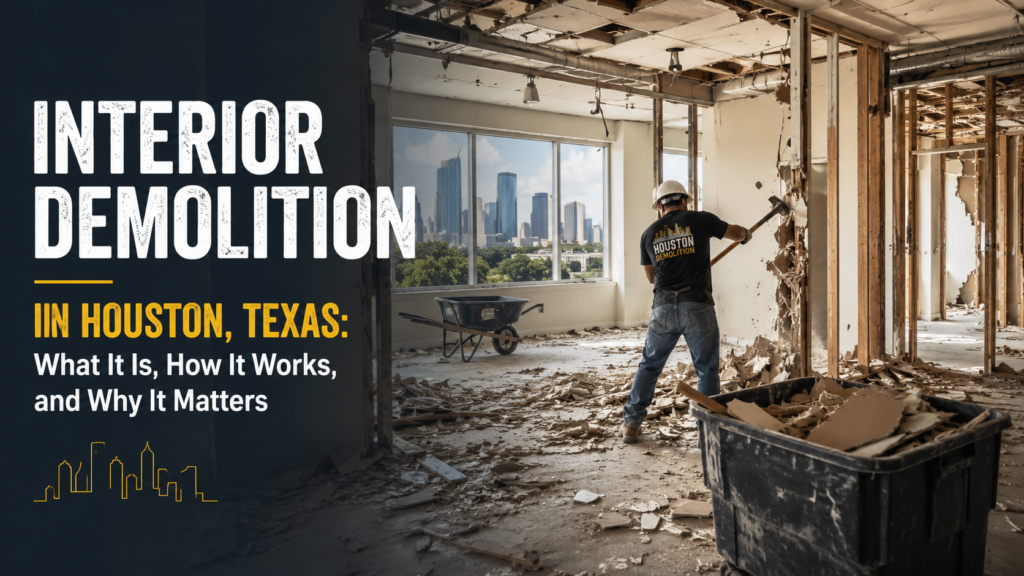
Houston is one of the fastest-growing cities in the United States, and with that growth comes an enormous volume of renovation, remodel, and retrofit activity across the city’s residential, commercial, and industrial building stock. Interior demolition is the foundational service that enables this activity the process of selectively removing interior components of a building while leaving the exterior structure and shell intact. Whether a Houston homeowner is reconfiguring a floor plan, a commercial operator is converting office space into a new use, or a developer is stripping a mid-century building down to its structural frame for a complete renovation, Interior Demolition Houston is the essential first step that makes the transformation possible.
What Interior Demolition Involves
Interior demolition sometimes called selective demolition or strip-out demolition targets only the non-structural interior elements of a building. These include:
- Drywall and plaster: Interior wall and ceiling surfaces are removed, typically by cutting and pulling the drywall sheets or by mechanically stripping plaster from lath.
- Flooring: Carpet, tile, hardwood, vinyl, and other floor coverings are removed down to the subfloor. In some cases the subfloor itself is also removed depending on condition and the requirements of the new installation.
- Cabinetry and millwork: Kitchen cabinets, bathroom vanities, built-in shelving, and other millwork items are removed.
- Plumbing fixtures: Toilets, sinks, tubs, showers, and associated plumbing rough-in are removed when bathrooms or kitchens are being renovated.
- Electrical fixtures and wiring: Light fixtures, outlets, switches, and in many cases old wiring are removed to prepare for updated electrical systems.
- HVAC components: Ductwork, air handlers, and mechanical equipment may be removed and replaced as part of a renovation.
- Interior partitions and walls: Non-load-bearing walls that are part of an existing floor plan being reconfigured are removed. This is one of the most common interior demolition tasks in Houston commercial renovations.
The critical distinction in all interior demolition work is between structural and non-structural elements. Load-bearing walls, structural columns, beams, and the building’s foundation system must never be removed without engineering review. Experienced interior demolition contractors in Houston identify structural elements before work begins and work carefully around them.
Pre-Demolition Planning and Hazardous Materials
Before interior demolition begins on any Houston property, two phases of pre-demolition work are essential: hazardous materials assessment and utility disconnection.
Houston’s building stock includes significant numbers of structures built before the 1980s, when asbestos-containing materials (ACMs) were commonplace in construction. Asbestos was used in floor tile adhesives, ceiling tile, textured coatings (popcorn ceilings), pipe insulation, roofing materials, and dozens of other building products. In Texas, the Texas Commission on Environmental Quality (TCEQ) and EPA regulations require that structures be surveyed for asbestos before renovation or demolition activities that could disturb these materials. If regulated asbestos is identified, licensed abatement contractors must remove it before interior demolition proceeds.
Lead-based paint is similarly common in Houston’s pre-1978 building stock. EPA’s Renovation, Repair, and Painting (RRP) rule requires that renovation contractors working in pre-1978 homes be certified and follow specific lead-safe work practices. Interior demolition on older Houston properties must account for these requirements.
Utility disconnection before interior demolition is non-negotiable. Electrical panels serving the areas being demolished must be de-energized. Gas lines must be capped or disconnected. Water supply lines and drain connections must be addressed before plumbing fixtures are removed. Failing to properly isolate utilities before demolition creates serious safety risks for workers and can damage building systems serving portions of the structure that will be retained.
Interior Demolition in Houston’s Residential Sector
Houston’s residential renovation market is substantial, driven by the city’s growing population, the aging of its housing stock, and the consistent demand for updated kitchens, bathrooms, and open floor plan layouts. Interior demolition is the starting point for virtually every significant residential renovation project in the city.
Common residential interior demolition projects in Houston include:
- Kitchen gut renovations: Complete removal of existing cabinets, countertops, flooring, and often walls to create an updated, open kitchen layout.
- Bathroom remodels: Removal of tile, fixtures, vanities, and often the shower or tub surround down to the wall structure.
- Wall removal for open floor plans: Houston homeowners frequently remove interior walls between living rooms, dining rooms, and kitchens to create the open layouts that are standard in modern home design.
- Basement and attic conversions: Converting previously unfinished spaces often involves stripping existing materials and preparing structural surfaces for habitation.
Houston’s hot, humid climate creates specific conditions that residential interior demolition must account for. Moisture-related damage mold on drywall, moisture behind tile, rot in floor framing is common in Houston homes and is frequently discovered during demolition. Responsible interior demolition contractors identify these conditions and communicate them clearly before they are covered over with new materials.
Commercial Interior Demolition in Houston
Houston’s commercial interior demolition market is particularly active given the city’s dynamic economy and its constant cycle of tenant changes, building repositioning, and commercial renovation. Office suites, retail spaces, restaurants, healthcare facilities, and industrial warehouses all generate regular interior demolition demand.
Commercial interior demolition differs from residential work in several important ways. Commercial buildings are subject to more extensive permit requirements the City of Houston’s permitting process requires demolition permits for commercial work, and the scope of permits reflects the work being performed. Commercial buildings are also more likely to contain specialized systems fire suppression, complex HVAC, data and communications infrastructure that must be carefully managed during demolition to avoid disrupting systems serving portions of the building outside the demolition scope.
Debris Management After Interior Demolition
Interior demolition generates significant quantities of material that must be removed from the site. Drywall, flooring, cabinetry, fixtures, and miscellaneous building materials can fill multiple dumpsters on even a moderate-scale project. In Houston, construction and demolition waste disposal is regulated under Harris County and City of Houston solid waste management requirements.
Responsible interior demolition contractors in Houston separate and sort demolition debris to maximize recycling: metal (steel studs, copper pipe, aluminum conduit) is separated for scrap metal recycling; concrete and masonry go to recycling facilities that process it into aggregate; clean wood framing may be chipped or composted; and general debris goes to Type IV construction waste landfills or the city’s authorized solid waste facilities. This material sorting reduces disposal costs and supports Houston’s sustainability objectives.
Conclusion
Interior demolition in Houston is a skilled, regulated, and safety-critical service that sits at the beginning of the renovation lifecycle for residential and commercial properties across one of America’s largest and most dynamic cities. Understanding what interior demolition involves the hazardous materials survey, utility disconnection, selective removal of non-structural components, and responsible debris management gives Houston property owners and developers the foundation to plan renovation projects effectively and execute them safely.